|
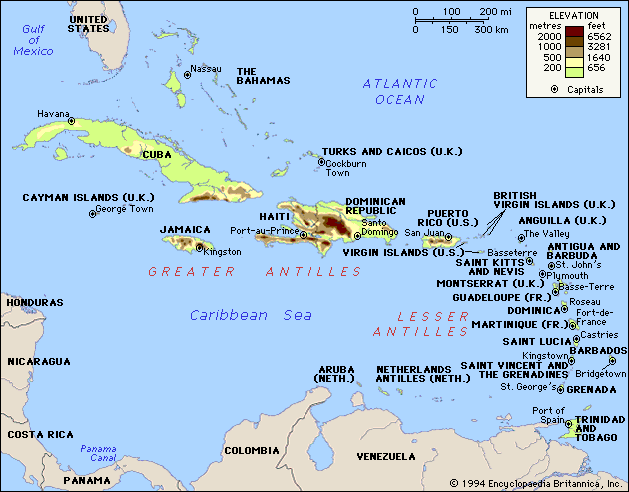
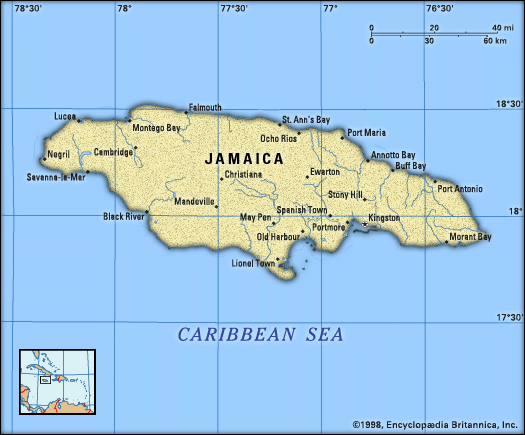
The Commonwealth of the Bahamas is comprised of some 700 islands, and 2,000 islets (or cays); however, only 30 of those islands and cays are permanently inhabited. The Bahamas won their independence from Britain in 1973. The population is 300 thousand, and English is the official language. St. Lucia, formerly ruled by the U.K., is home to approximately 200 thousand people. The population is nominally 90% Catholic. There are six assemblies on the island, and two commended national workers. Jamaica's population is about 2.6 million and the official language is English. More than 6,000 believers fellowship in over 80 assemblies around the island. Twenty-two couples and five single workers have been commended by the national assemblies and they are strategically located to reach key population areas. St. Vincent and the Grenadines is home to 100 thousand people. English is the official language in this independent sovereign state within the British Commonwealth, although some French patois is also spoken. The island nation of Antigua has been independent of Britain since 1981 yet remains within the Commonwealth. It was one of the first Caribbean Islands to promote tourism - in the 1960's - and is therefore one of the wealthiest. The population (with its sister island of Barbuda) is approximately 100,000 and the official language is English. With a multi-ethnic population of 1.3 million the mix of African and East Indian cultures gives Trinidad (and its sister island of Tobago) a flamboyant character. The main languages are English and Creole. Along with Christianity, there are strong Hindu and Islamic influences. Settled by the British in 1627, Barbados is the only former Caribbean colony that has never changed hands. The island won independence in 1966 but retains its strong British flavor. With 628 people per square kilometer, it is one of the world's most densely populated nations. Despite high unemployment, Barbados has a stable democracy and a relatively prosperous economy. |
|
|
|